
What This Article Covers
- The three macro boundaries that actually define a relationship structure
- The long list of micro distinctions couples try (and struggle) to negotiate
- Why those micro distinctions are nearly impossible to pin down
- A simpler approach: set the macro line, then use trigger awareness instead of more rules
- The 80/20 rule for sustainable outside connections
Most Couples Start With Macro Boundaries
Before anything else, every couple sets a macro line.
It’s the big question: how much romantic or sexual space exists outside this relationship?
The Three Macro Boundaries
- Vanilla — no romantic or sensual interaction with anyone else, period.
- Polysensual — sensual dances, flirting, dates with others, but no sex.
- Polysexual — sexual exchange with others is genuinely on the table, for both partners.
Most couples land in one of these three. It’s the foundation everything else gets built on.
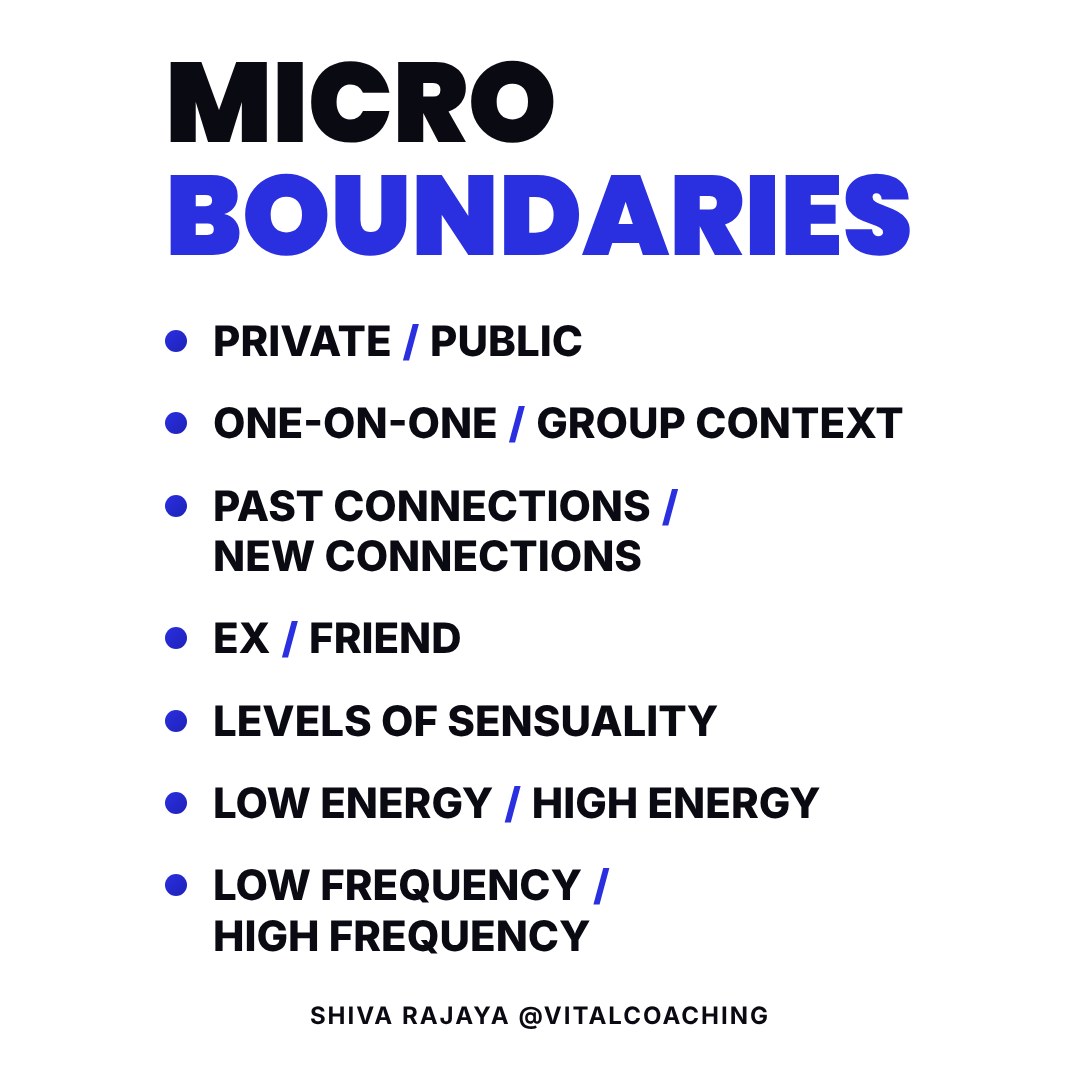
Then Come The Micro Distinctions
This is where it gets complicated.
Inside any macro boundary, couples start trying to negotiate dozens of smaller rules. Here are the ones that come up again and again.
Private Vs. Public
Meeting someone one-on-one in private feels different than meeting them in a group, in public.
“It’s just dinner, nothing’s happening” — true, and still a different situation than the same dinner with five other people at the table.
One-On-One Vs. Group Context
Some people are fine with any interaction in a group setting, but draw a line at one-on-one time.
Past Connections Vs. New Connections
An existing friendship feels different than a brand-new spark. Neither is automatically safer.
Ex Vs. Friend
“We’re just friends now” — a common line, and a very hard one to fully verify or regulate from the outside.
Levels Of Sensuality
- No touch at all — purely verbal, no physical charge.
- Light physical contact — a hug, a hand on the back, nothing erotic.
- Sensual dance or touch with no genital contact — contact dance, partner dance, a little fire without sex.
- Genuine erotic charge rising — something is clearly activating, even without anything explicit happening.
Each of these can be a different line for a different person. None of them are wrong. All of them are hard to standardize.
Low Energy Vs. High Energy
“We just talked for hours” can mean two very different things: a low-key, easy chat, or a conversation charged with laughter, intensity, and chemistry.
Low Frequency Vs. High Frequency
Seeing someone once a month is a different relationship than texting or meeting them multiple times a week.
Frequency changes the weight of a connection, even when nothing else about it changes.
Why These Micro Distinctions Are So Hard To Pin Down
They’re personal. They’re situational. They shift depending on mood, history, and context.
Negotiating all of them takes forever — and the agreement rarely holds for long, because the lines keep moving.
“Different” Doesn’t Mean “Not Uncomfortable”
“This is different because she’s just an old friend” — that might be true. It still might not feel okay.
Difference and discomfort are not the same thing. One is a fact. The other is a feeling worth listening to.
So Drop The Micro Boundaries
Rather than negotiating every possible distinction, set the macro line and stop there.
Everything that happens within that macro boundary is within the range of what’s okay — as long as certain qualities stay present.
The Qualities That Actually Hold It Together
- Consideration — thinking about your partner before you act.
- Attunement — staying tuned in to how they’re doing, not just yourself.
- Transparency — nothing hidden, nothing needing to be dug out later.
- Team spirit — still playing for the same side.
- Loyalty — your partner’s wellbeing still comes first.
- Integrity — doing what you said you’d do.
- Respect and honesty — the baseline, every time.
The One Question That Actually Matters
Is this crossing one of the macro boundaries — yes or no?
If the answer is no, it’s within the range of what’s okay. The micro details don’t need a rulebook.
When The Trigger Is Real, Not Just Sensitive
Sometimes a trigger fires at a 7 or 8, and it’s not oversensitivity. Something real is happening.
A common example: your partner is spending more time and energy with that other person than with you. That’s not a micro-boundary technicality — that’s worth a direct conversation.
The 80/20 Rule
Around 80% of your romantic potential directed to your primary partner, 20% to the outer circle — that’s sustainable.
When It Shifts Toward 50/50
This is where it gets harder to navigate. When the split moves closer to even, the primary relationship starts losing its center of gravity.
That shift is worth noticing long before it becomes a crisis.
Trust The Trigger, Not The Rulebook
You don’t need a rule for every scenario. You need to know your macro line, hold the qualities that make it safe, and pay attention when something inside you says this one is different.
If you’re navigating this kind of boundary conversation with your partner, this is exactly where coaching helps. Reach out for coaching →
Keep Reading
- Social Media Sovereignty: The Boundaries Every Couple Needs To Set Before It Becomes A Fight
- Social Media Boundaries: The One Macro Rule, The Right Questions To Ask, And The Impact Your Social Media Choices Have On Your Relationship
- What Is Coupling Polarity? Masculine, Feminine, Light, And Dark Energy — 4 Possible Coupling Configurations
MORE
Check all Coupling Design articles →
Download Your Fight Mastery App

